


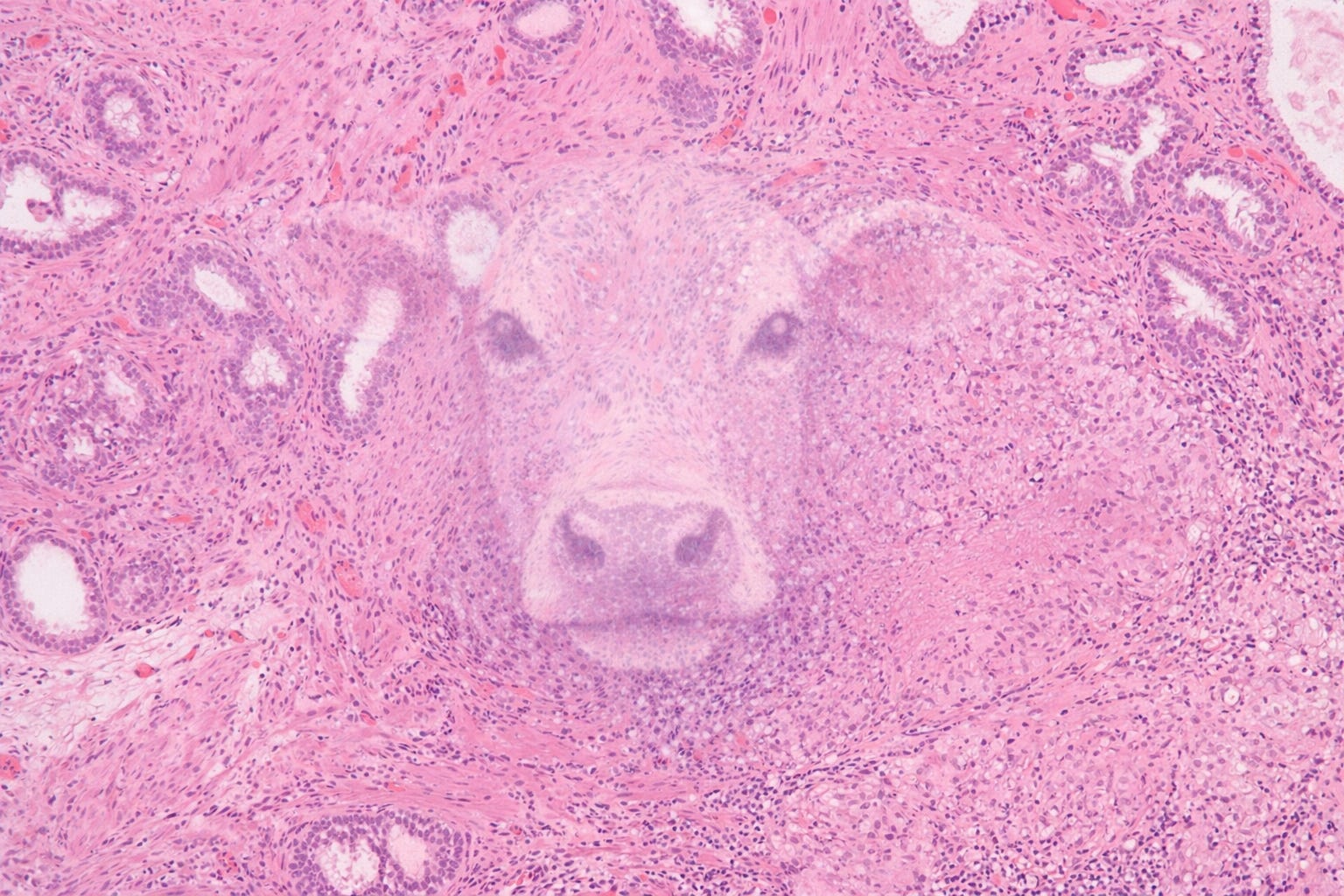
Every year, roughly 83,000 Americans are diagnosed with bladder cancer. Of those, about 70-75% have what’s called non-muscle-invasive bladder cancer, or NMIBC -- meaning the tumor hasn’t grown into the muscular wall of the bladder. It’s still on the surface, the inner lining. That’s the good news. The less-good news is that NMIBC has a nasty habit of coming back after surgery, and somewhere between 30 and 40% of those patients have intermediate or high-risk disease that needs more than just tumor removal.
So what do doctors do for these patients?
They thread a catheter into the bladder and inject a tuberculosis vaccine: they hold it there for about two hours. They repeat this maneuver, once a week, for six weeks. And it works! Around half of high-risk patients will still be cancer-free five years later, which is significantly better than any chemotherapy drug available for this disease.
Yes, you read that right: the standard treatment for one of the most common cancers in the United States is a tuberculosis vaccine, poured directly into the bladder.
How on earth did we get here?
Bacteria and cancer: an old marriage
The vaccine in question is BCG -- full name Bacillus Calmette-Guérin -- christened for being the brainchild of two scientists Albert Calmette and Camille Guérin, who spent 13 years at the Pasteur Institute in Lille, France, painstakingly weakening a strain of bovine tuberculosis bacteria. Between 1908 and 1921, they subcultured this strain of bacteria approximately 230 times on glycerine-bile-potato medium (sound delicious, doesn’t it?) until its virulency was softened to “can cause strong immune response” from “can cause tuberculosis”. On July 18, 1921, the vaccine was given to a newborn baby at the Charité Hospital in Paris - a child whose mother had just died of tuberculosis. Miraculously, despite being maternally exposed, the baby never developed TB, and BCG went on to become the most widely administered vaccine in human history. To date, over four billion doses have been administered across the world.
What about the BCG-cancer connection? Well, that took another half-century of observations, experiments... and a fair amount of professional ridicule.
The intellectual paper trail starts with a New York bone surgeon named William B. Coley. In 1890, Coley lost a young patient to sarcoma and, haunted by it, started digging through hospital records for any case where a similar cancer had successfully resolved. He found one, and it was weird (in medical lingo, I believe this case would be considered a zebra.): a man with an inoperable cheek sarcoma whose tumor had completely disappeared after he contracted a life threatening streptococcal infection. Intrigued, Coley spent months tracking the guy down in the tenement slums of the Lower East Side of Manhattan. Eventually, he found him, alive -- free of cancer, seven years after he had survived the severe strep infection.
Coley spent the next four decades injecting bacterial mixtures -- heat-killed Streptococcus and Serratia marcescens, later called “Coley’s toxins” -- into more than a thousand cancer patients. He documented genuine remissions in sarcomas, lymphomas, and testicular cancers across 150 publications. His own supervisor at Memorial Hospital, a pathologist named James Ewing, thought it was dangerous nonsense and championed radiation therapy instead. The FDA went further, effectively banning Coley’s toxins in 1962 -- decades after his death. But Coley kept at it for his entire career, publishing case after case, because he’d seen the remissions with his own eyes. Today, he’s vindicated: he’s recognized as one of the fathers of cancer immunotherapy.
A few metropolitan areas south of Coley, another man with an astute eye was approaching a similar hypothesis about cancer after finding an interesting pattern in rows of numbers. His name was Raymond Pearl, a biostatistician at Johns Hopkins; and in 1929 while he was analyzing a dataset of 7,500 autopsies, he noticed something about decedents with a history of tuberculosis infection: they had significantly lower rates of cancer than those without. How he didn’t chalk this up to statistical bias, I don’t know. Critics at the time certainly tried -- maybe TB patients just died too young to develop cancer. But the finding lingered in the background of immunology for decades, the kind of anomaly that nobody could quite explain away or do anything with.
Then, in 1959, a young physician named Lloyd Old at the Sloan-Kettering Institute did something with it. He published a two-page paper in Nature that changed the game. Working with Donald Clarke and Baruj Benacerraf, Old showed that mice infected with BCG developed increased resistance to subsequently transplanted tumors. BCG-activated macrophages attacked the tumors and extended survival. It was the first direct experimental proof that you could deliberately mobilize the immune system against cancer.
(Old, by the way, went on to co-discover tumor necrosis factor, help identify p53, and author over 800 papers. When he died in 2011, Nature Immunology called him the “Father of Modern Tumor Immunology.”)
The 1960s and ‘70s: BCG mania, BCG disappointment, BCG revival
Old’s paper kicked off a wave of clinical experimentation. Researchers tested BCG in melanoma, leukemia, lung cancer, colon cancer, breast cancer - you name it. At UCLA, surgical oncologist Donald Morton injected BCG directly into melanoma tumors and saw 90% of the injected lesions shrink. Some uninjected tumors were disappearing too, suggesting that patients were experiencing a systemic immune response.
But the enthusiasm outran the evidence. Trial after trial in other cancers came back negative or inconclusive. A definitive randomized lung cancer study of 425 patients showed zero benefit. The pattern kept repeating: BCG would produce tantalizing local responses, then fail to deliver consistent results in controlled settings. By the mid-1970s, the oncology establishment was losing patience with BCG and with immunotherapy in general.
These setbacks didn’t dissuade a particular Alvaro Morales, a Colombian-Canadian urologist at Queen’s University in Kingston, Ontario.
You see -- Morales recognized something that, in retrospect, seems obvious. Earlier animal experiments by Baruch Zbar and Herbert Rapp at the National Cancer Institute had established four criteria for BCG to work against tumors:
the patient’s immune system has to be functional
there need to be enough live bacteria in the bolus
the bacteria need to be injected in close physical proximity to the cancer cells
the tumor burden had to be small
Superficial bladder cancer, Morales realized, met every single criterion. The bladder is a sealed, accessible cavity; you can catheterize BCG directly onto the tumor surface and hold it there - and the tumor burden after surgical resection is minimal. Most of the patients he was seeing were also immunocompetent. In short, he realized that the bladder was the ideal organ for BCG immunotherapy -- arguably the only ideal organ.
When Morales applied for a grant from the National Cancer Institute of Canada, the reviewer flatly rejected it: “BCG is not only ineffective and dangerous but a throwback to the stone age of tumor immunology.”
But the research was rescued by the Cancer Research Institute in New York - an organization founded in 1953 by none other than Helen Coley Nauts, who was William Coley’s daughter. After his passing, she had made it her life’s mission to preserve her father’s legacy of bacterial cancer therapy. The symmetry here is almost too neat!
Morales ran his trial at Kingston General Hospital starting in 1973. Having obtained samples of freeze-dried BCG from the Institut Armand Frappier in Montreal, he devised his protocol: 120 mg of BCG in saline; instilled through a catheter; retained in the bladder for two hours; rinse and repeat weekly for six weeks.
(One entertaining footnote: the six-week schedule was partly because the BCG shipped from the Frappier Institute came packaged six vials per box. It later turned out to be a genuinely excellent treatment duration... sometimes the universe just hands you one)
His 1976 paper in The Journal of Urology reported results in nine patients -- nine! The outcome: a twelve-fold reduction in tumor recurrence. And zero of the nine patients relapsed in the years following their treatment.
Predictably, however, the urological community’s response ranged from skeptical to hostile; BCG had burned too many people in too many other cancers. But confirmatory trials at Memorial Sloan Kettering and the University of Texas San Antonio replicated his findings, and a landmark Southwest Oncology Group trial published in the New England Journal of Medicine in 1991 settled it for good: for carcinoma in situ of the bladder, BCG produced a 70% complete response rate versus 34% for the best available chemotherapy. The five-year disease-free survival rate was a whopping 45% versus 18%.
With this irrefutable data readout in hand, BCG became a gold standard therapy for this disease. The FDA approved intravesical BCG in 1990, making it the first FDA-approved cancer immunotherapy in the United States. And it remains the only intravesical agent ever proven to prevent disease progression -- not just recurrence -- to muscle-invasive bladder cancer.
One catch: since 2012, the world has been in the grip of a chronic BCG shortage. Sanofi Pasteur’s manufacturing plant in Toronto was shuttered after flooding, mold contamination, and -- in a detail that captures the absurd fragility of this supply chain -- nesting birds in the air handling system. Sanofi permanently gave up on its BCG product in 2016, leaving Merck as the world’s sole major supplier. Despite Merck increasing production by over 100%, they still can’t meet global demand. BCG is a live organism; each batch takes about three months to produce under stringent sterility controls. The shortage has now lasted over 13 years, forcing doctors to ration doses, substitute inferior chemotherapy, or in some cases recommend full bladder removal for patients who might have kept their bladders if BCG were available. Merck has committed $650 million to a new facility expected to come online in late 2026. Until then, one of the most effective cancer drugs in the world remains one of the hardest to get.
Why I like this story beyond bladder cancer
The BCG story is, on its surface, a fun piece of medical history. But I think it’s also one of the best illustrations of two things that keep showing up in the history of drug discovery, both that I find endlessly fascinating:
1. Sometimes, the most improbable corners of medicine collide
A tuberculosis vaccine, derived from cow bacteria, attenuated over 13 years in a French laboratory, ends up as a bladder cancer treatment in Canada, funded by the daughter of a 19th-century bone surgeon who injected streptococcal bacteria into sarcoma patients. If you pitched this as a novel, your editor would send it back with “too contrived” scrawled in the margins.
But it happened!
Drug repurposing stories like this are common enough that you’d think we’d stop being surprised, but the improbability of the connections never quite loses its punch. Odds are you’ve heard of these, but I’ll run through them anyway:
Thalidomide - the drug that caused a generation of birth defects - turned out to inhibit blood vessel growth and is now a frontline treatment for multiple myeloma.
Viagra (boners) and minoxidil (hair) were both failed blood pressure medications that ended up being great for older guys.
Metformin, the world’s most prescribed diabetes drug, started life as a treatment derived from French lilac, a folk remedy for frequent urination that had been known since the Middle Ages
I can go on, obviously - but if you’d like to read about more interesting drug repurposing stories, read Derek Lowe’s piece on the topic
2. Physicians notice things that bench scientists miss
The BCG-cancer connection was assembled, piece by piece, by people who were paying attention. First, it was Coley noticing that a cancer patient’s infection coincided with tumor regression - and instead of writing it off as an anecdote, he pursued it for forty years. Then it took Pearl noticing the inverse relationship between TB and cancer in autopsy data. And Old proving the mechanism in mice. And Morales recognizing the bladder as uniquely suited organ for testing BCG efficacy in cancer and designing a trial around that insight.
Each of these steps required someone who was both a practicing clinician and a curious scientist -- someone who could stand at the bedside and see a pattern, then walk to the bench and test it. This physician-as-discoverer archetype comes up again and again in the history of medicine, and I find it really cool how many examples like these rhyme with the BCG story. I’ll indulge you with a few:
In April 2012, six-year-old Emily Whitehead became the first child to receive CAR-T cell therapy for her relapsed acute lymphoblastic leukemia at the Children’s Hospital of Philadelphia. Her lab-engineered T cells were at war with her cancer - in the process, triggering a catastrophic cytokine storm in her body. Her blood pressure cratered to 53/29, and she developed a 105°F fever. She was put on a ventilator; doctors told her parents she had a one-in-a-thousand chance of surviving the night.
The treatment team, working with CAR-T pioneer Carl June at Penn, ordered a broad cytokine panel - 30 analytes - and the results showed that one protein, interleukin-6, was wildly elevated. IL-6 is not even produced by T cells, so nobody in the field would have predicted it was the culprit. But it happened to be one of the very few cytokines that had a specific FDA-approved drug to block it: tocilizumab, a monoclonal antibody used to treat rheumatoid arthritis. And Carl June happened to know about tocilizumab because his own daughter, about a year older than Emily, had arthritis and was being treated with it.
He advocated for them to give it a try. After all, there wasn’t much left that they could do: so they gave Emily the drug. Within hours, she stabilized. She woke up on her seventh birthday. And eight days later, she was declared cancer-free.
Tocilizumab went on to become the standard treatment for cytokine release syndrome in CAR-T therapy, receiving adjunct FDA approval for that indication along with CAR-T’s approval for ALL in 2017. It was eventually also approved for COVID-19-related cytokine storm during the pandemic.
An arthritis drug, repurposed by a cancer researcher who recognized the connection because of his daughter’s medical condition, now manages a life-threatening side effect of one of the most advanced cancer therapies ever developed and also treats the immune overreaction caused by Covid. Pretty neat story.
OK, one more. In 1961, a young Navy surgeon named Judah Folkman was stationed at the National Naval Medical Center, tasked with developing artificial blood substitutes. While perfusing rabbit thyroid glands with hemoglobin, he noticed something kind of odd: tumors -- often a common sight in the glands of these rabbits -- weren’t growing the way they did when the glands received actual blood. Specifically, he found that they couldn’t recruit new blood vessels. Without that supply line, they stayed tiny.
Folkman spent the next decade formalizing that observation into a hypothesis: tumors depend on growing new blood vessels -- angiogenesis -- and if you could block that process, you could starve cancers into submission. He published the theory in the New England Journal of Medicine in 1971.
The scientific community’s response was vicious. Like Morales and Coley, Folkman was called a charlatan. The eminent virologist John Enders, when asked to review one of Folkman’s early papers, reportedly told him not to worry about anyone stealing his ideas - they were “theft-proof” because nobody would believe them.
But these taunts didn’t deter him. And for over a decade, Folkman worked in relative isolation, insisting that the future of cancer treatment was cutting off blood supply rather than cutting out tumors.
He turned out to be right of course. His lab discovered angiostatin, endostatin, and the anti-angiogenic properties of thalidomide. And in 2004, the first angiogenesis inhibitor - bevacizumab (Avastin) - was approved by the FDA for colon cancer. Today, over a dozen anti-angiogenic drugs are approved for various cancers, and more than 1.5 million patients have received them.
The takeaway of BCG
There is a recurring pattern in medicine where the people who see something new are the people positioned at unusual intersections - whether it be a bone surgeon reading old case files to do right by a former patient he couldn’t cure; a urologist who understood immunology criteria for bacterial therapy; a Navy surgeon watching tumors in rabbit glands; or a cancer researcher who happened to know an arthritis medication because of his daughter.
A century-old preparation of weakened cow bacteria, developed to prevent tuberculosis in French infants, remains one of the most effective cancer treatments available. We are still discovering how it works - a 2025 study in Cancer Cell showed that BCG can actually travel to the bone marrow and reprogram stem cells to produce immune cells with enhanced anti-tumor capability, a shock to the formerly well accepted theory that BCG operated only locally in the bladder.
When the 2018 Nobel Prize in Physiology or Medicine was awarded to James Allison and Tasuku Honjo for their work on immune checkpoint inhibitors - research which served as the basis of drugs like Keytruda and Opdivo that have transformed oncology - it was the culmination of a story that runs in a direct line from Coley’s bacterial injections in the 1890s, through Old’s BCG mouse experiments in the 1950s, through Morales’ nine-patient trial in the 1970s. BCG was the proof of concept: you can turn the immune system against cancer. Everything that followed built on that foundation.
And all of it because a couple of French researchers spent 13 years passing a cow bacterium through growth medium, and decades later, a urologist in Ontario realized a bladder was the perfect container to pour it into.
The eminent virologist John Enders, when asked to review one of Folkman’s early papers, reportedly told him not to worry about anyone stealing his ideas - they were “theft-proof” because nobody would believe them.
But these taunts didn’t deter him. And for over a decade, Folkman worked in relative isolation, insisting that the future of cancer treatment was cutting off blood supply rather than cutting out tumors.
He turned out to be right of course.
———-> sometimes I wonder where I’m so obviously calling someone a charlatan when they aren’t (the most obvious being peptides,ivermectin, etc)
On the one hand, 99/100 likely hurt patients. On the other hand, stories like these give people that tiny tiny sliver of hope
Interesting as usual!!